What it’s all about
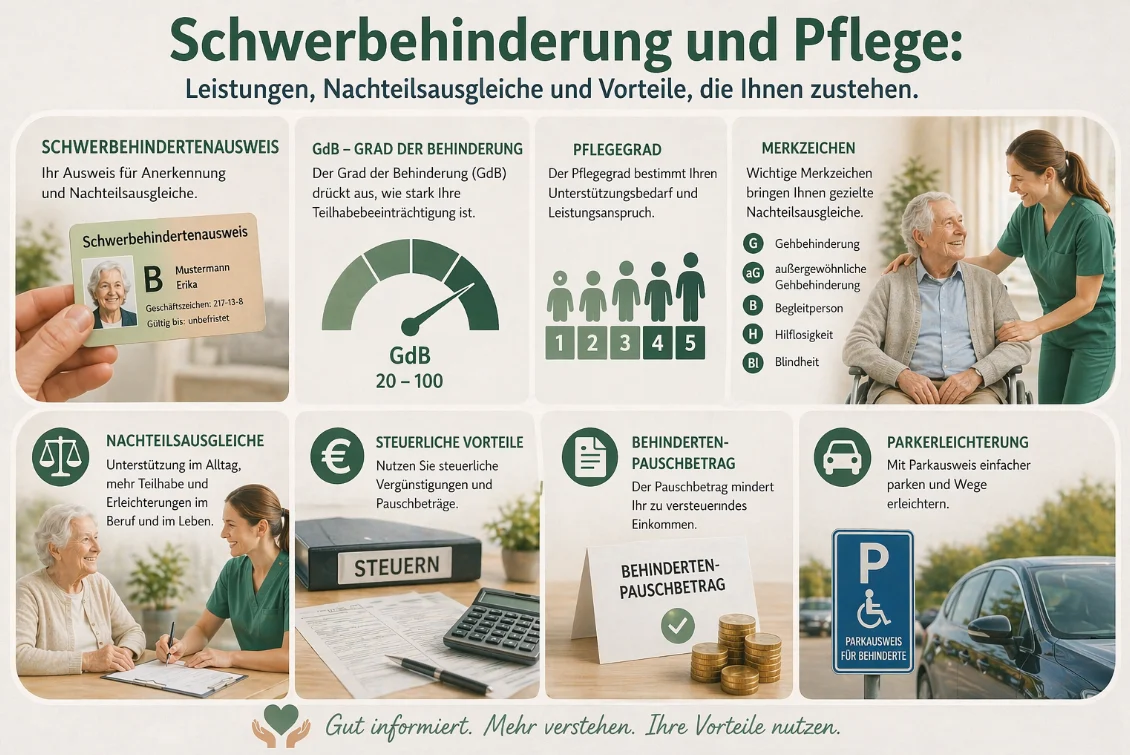
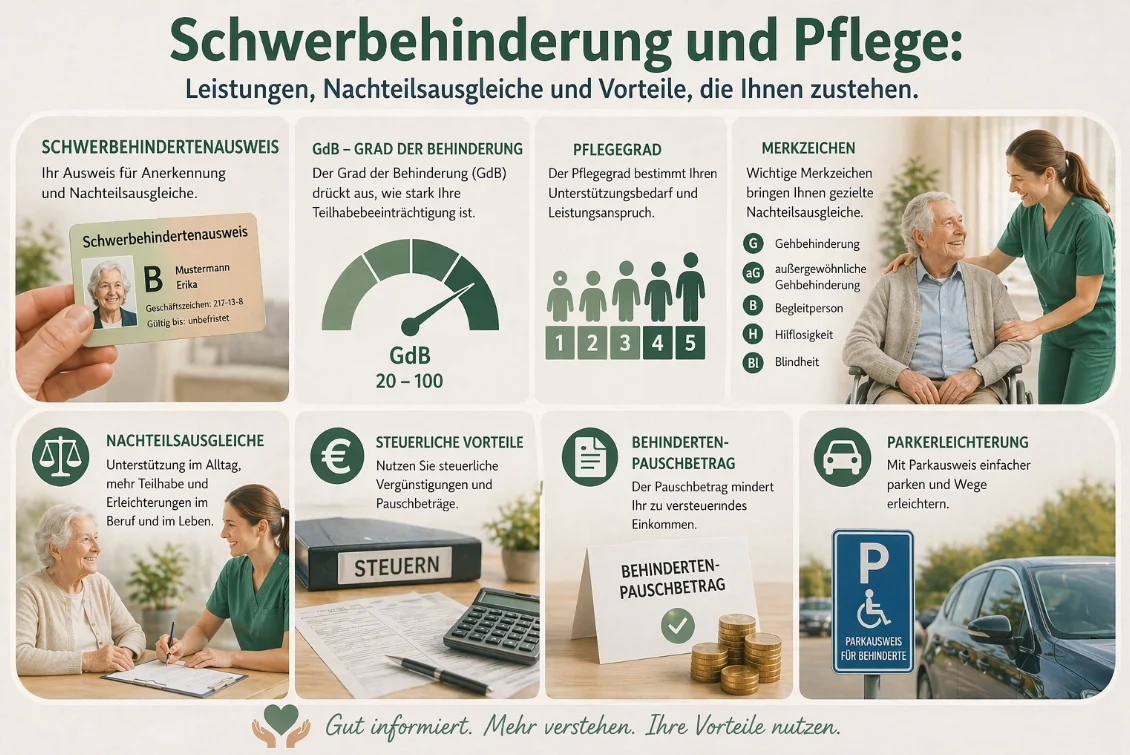
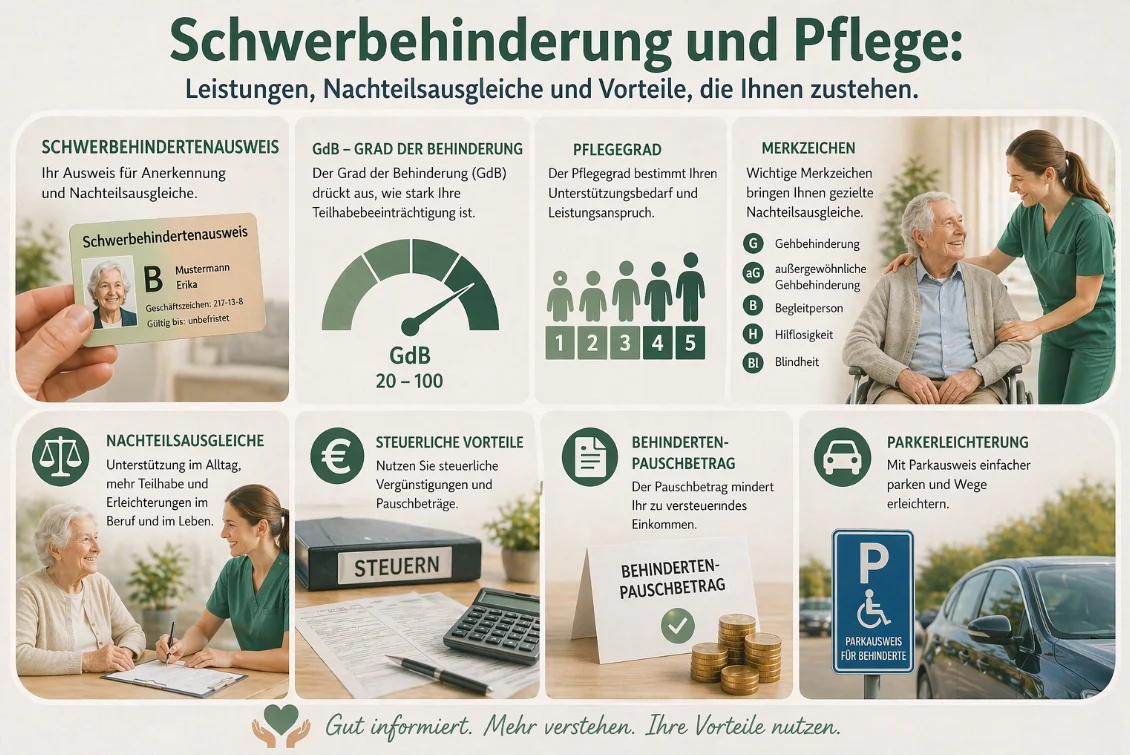
The flat-rate allowance for people with disabilities is based on the assessed degree of disability (GdB).
Important information for relatives
Under certain conditions, family carers may claim a flat-rate care allowance.
Next step
In addition, travel costs or exceptional expenses may be relevant.
Disability allowance
People with a recognised GdB (degree of disability) can claim a flat-rate disability allowance against their income tax. The amount depends on the GdB. The flat-rate allowance is intended to compensate for typical additional expenses arising from disability, without the need to provide proof of each individual expenditure.
Flat-rate care allowance for relatives
Anyone who provides personal care to a person in need of care, free of charge, may, under certain conditions, claim a flat-rate care allowance. The amount depends on the care level or care category. It is important that care is actually provided and that the tax requirements are met.
Travel costs and exceptional expenses
In cases of disability and long-term care, travel costs, medical expenses or other exceptional financial burdens may also be a factor. It is worth checking whether providing individual receipts is more advantageous than claiming a lump sum. The tax office loves receipts. So you’re better off giving them neat, organised receipts rather than creative ‘reminders’.
Supporting documents and digital submission
Proof of the GdB is provided by an official notice or a severe disability card. From the 2026 tax year onwards, proof for the disability allowance is primarily to be provided via an electronic notification procedure. Nevertheless, official notices should be kept in case any data is missing or further information is requested.
Overview: What matters now
| Situation | What does that mean? | The sensible next step |
|---|---|---|
| GdB assessed | A disability allowance may be available. | Have your GdB assessment letter to hand for tax purposes. |
| Caring for relatives | Check the flat-rate care allowance. | Document your care level and the care you provide yourself. |
| Many journeys are made | Travel costs may be a factor. | Keep a logbook or provide evidence. |
| High healthcare costs | Check for any exceptional financial burdens. | Collect receipts. |
Checklist for documents
GdB decision
Keep your disability certificate or ID card to hand.
Care level
Have your care level assessment notice and evidence of personal care to hand.
Receipts
Keep records of travel costs, medication, medical aids, co-payments and personal contributions.
Tax documents
Collect your ELSTER details, tax ID, previous tax assessments and supporting documents relating to your care allowance.
Frequently Asked Questions
Can I claim both the flat-rate allowance and my actual costs at the same time?
That depends on the type of expense. You have a choice regarding certain disability-related expenses. It may be worth seeking tax advice.
Is the lump-sum payment available from GdB 20 onwards?
Yes, the disability allowance may apply once a GdB of 20 or higher has been determined.
Do relatives automatically receive the flat-rate care allowance?
No. The eligibility criteria must be met and claimed on your tax return.
Do I need to send my ID to the tax office?
Documentation is increasingly being digitised. However, official notices should still be kept in case any queries arise.
Conclusion
Tax benefits are no substitute for care services, but they can provide significant relief. If you keep accurate records of your GdB, care level, travel and care costs, you’ll waste less money on the state. It takes enough as it is.