What it’s all about
The flat-rate allowance is based on the assessed degree of disability.
Important information for relatives
He can take into account typical additional expenses arising from a disability on a flat-rate basis.
Next step
Households requiring care should check whether a GdB has already been determined or whether an application should be made.
How does the flat-rate allowance work?
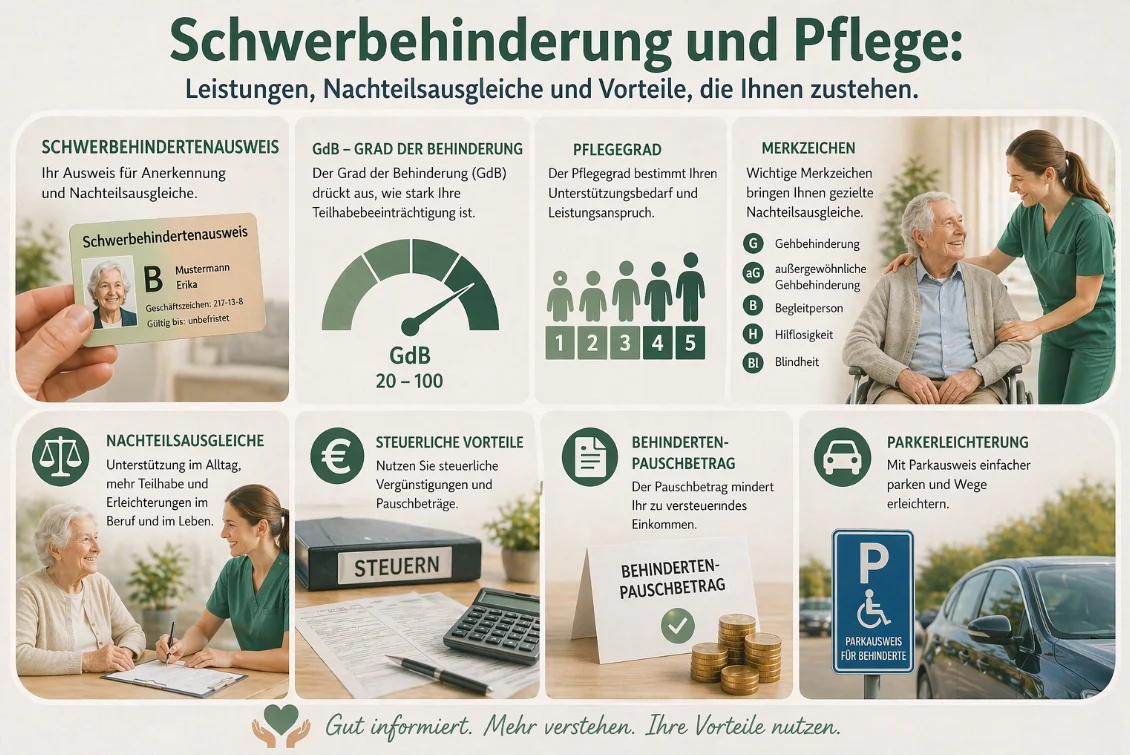
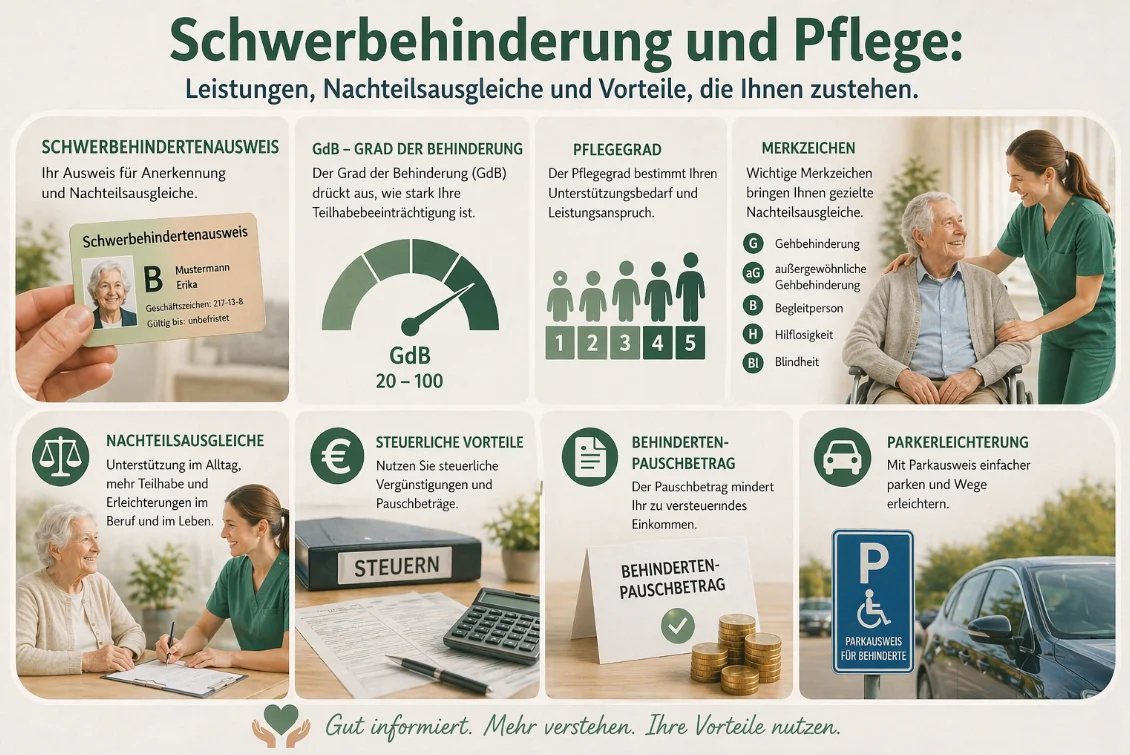
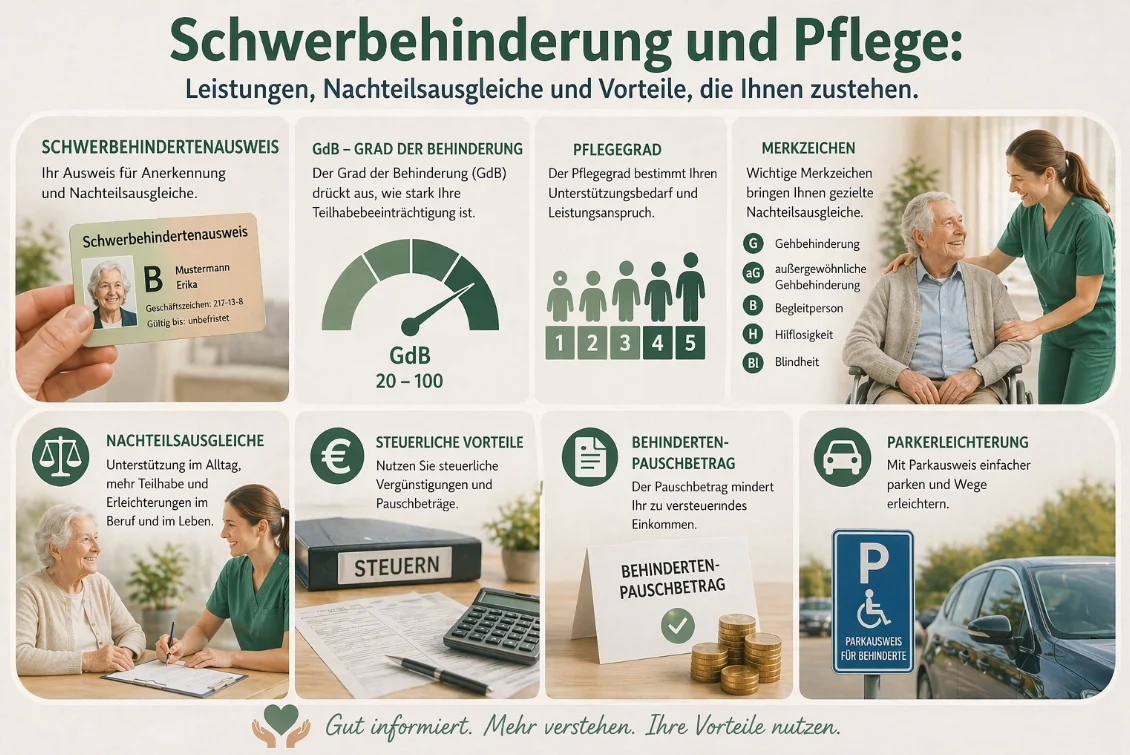
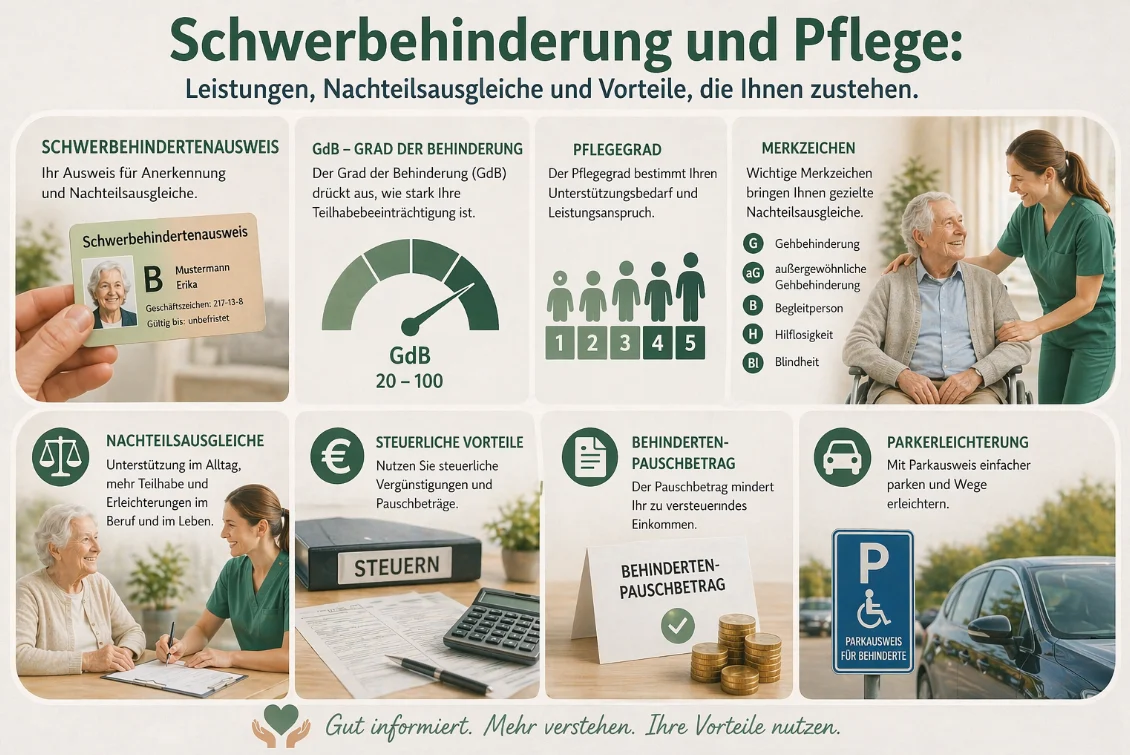
The disability allowance is taken into account in income tax and reduces taxable income. The amount depends on the degree of disability. It is intended to compensate for typical additional expenses without those affected having to provide proof of each individual expenditure.
Classification according to GdB
| GdB | annual lump sum |
|---|---|
| 20 | €384 |
| 30 | €620 |
| 40 | €860 |
| 50 | 1,140 euros |
| 60 | 1,440 euros |
| 70 | 1,780 euros |
| 80 | 2,120 euros |
| 90 | 2,460 euros |
| 100 | 2,840 euros |
| Helpless / blind / deafblind | 7,400 euros |
The figures correspond to the revised system in force since 2021. Tax law is subject to change, so please check your tax assessment and tax year. Naturally, as even tax relief requires reference tables.
Proof of income and tax return
The GdB is verified by means of a notification or a certificate. From the 2026 assessment period onwards, an electronic notification procedure is primarily envisaged for verifying the flat-rate allowance. If data is not available, the tax office may request further documentation.
Why households requiring care should look into this
Many people in need of care have permanent disabilities in addition to their care level. If the degree of disability (GdB) has not yet been determined, it may be worth applying for one. The care level assessment and the medical assessment report can provide supporting evidence in this regard.
Overview: What matters now
| Situation | What does that mean? | The sensible next step |
|---|---|---|
| GdB 20 or higher | A flat-rate allowance may be relevant. | Take this into account when completing your tax return. |
| GdB not yet applied for | Relief may be missing out on a great opportunity. | Check your application for severe disability status. |
| Classification code H or Bl | A very high flat-rate payment is possible. | Check the notice carefully. |
| No tax assessment notice – disadvantage | Some data may be missing. | Check the deadline for lodging an objection. |
Checklist for documents
GdB decision
Keep a copy of the decision regarding the degree of disability and any special status indicators.
Tax year
Check the year in which the GdB was determined and whether it was determined with retroactive effect.
Care records
Have your care level assessment and MD report to hand as supporting documentation.
Tax office
Check your tax assessment and, if any deductions have been omitted, respond within the deadline.
Frequently Asked Questions
Is the lump sum a payment?
No. It reduces your taxable income and only has an effect if you are liable for income tax.
Is it available from a GdB of 50?
It may apply from a GdB of 20. From a GdB of 50, the person is also considered to have a severe disability.
What does this mean if you have an H or Bl assessment?
In that case, a significantly higher flat-rate allowance may apply.
Can the lump sum be transferred?
In the case of children with disabilities, the benefits may, under certain conditions, be transferred to their parents.
Conclusion
The disability allowance is an important tax benefit. People in need of care and their relatives should not overlook it, particularly if they already have a care level, serious illnesses or a disability classification.