What it’s all about
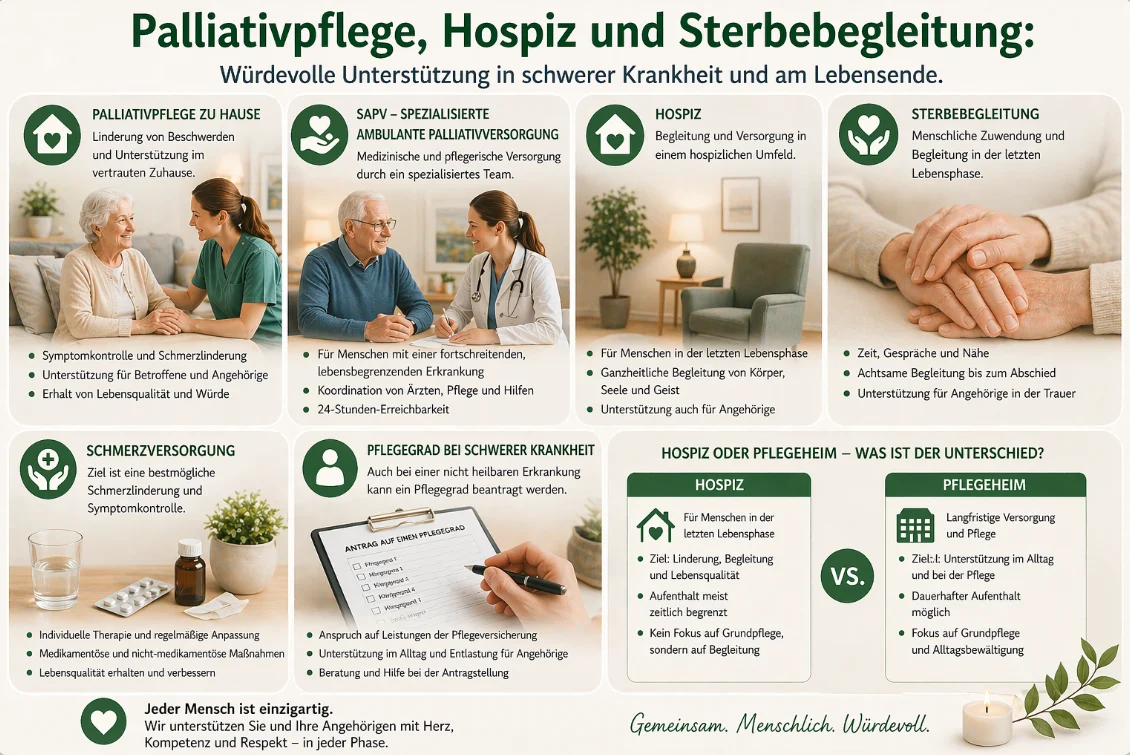
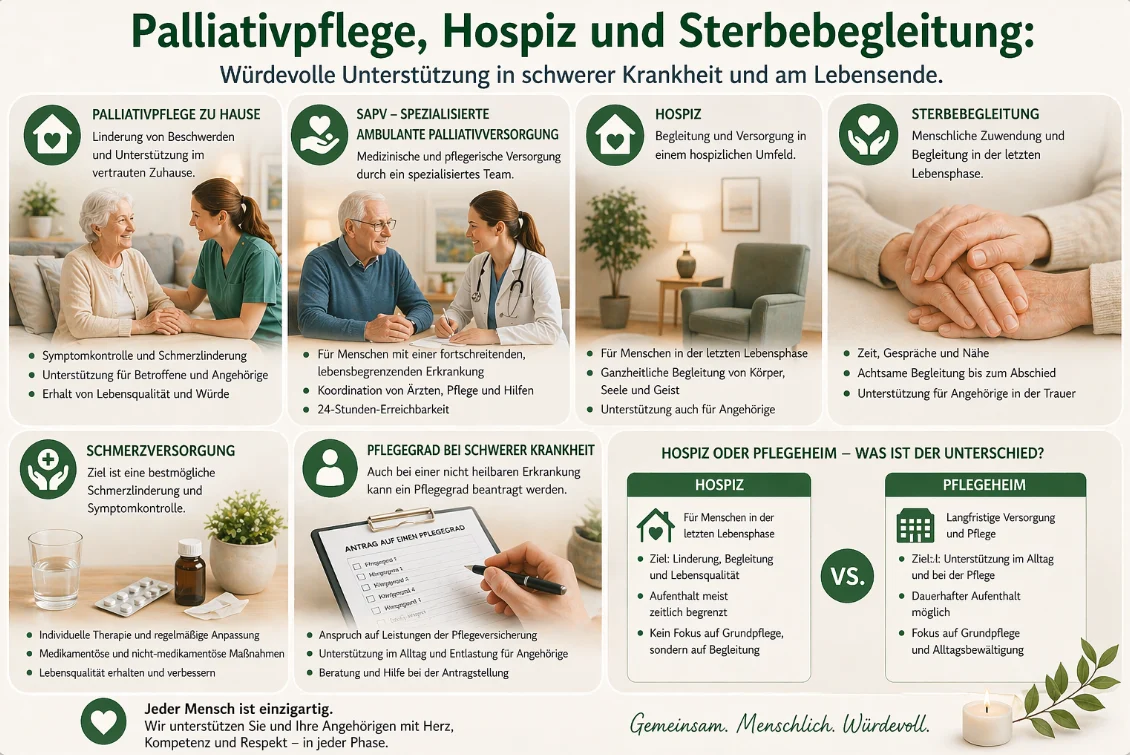
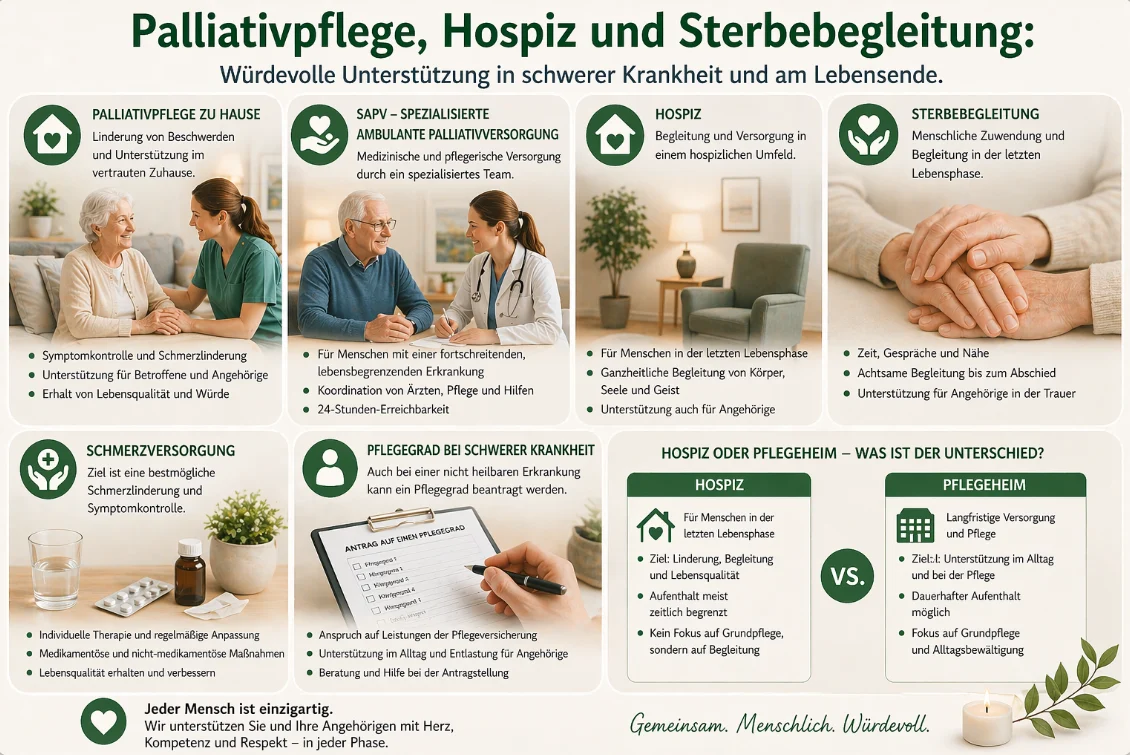
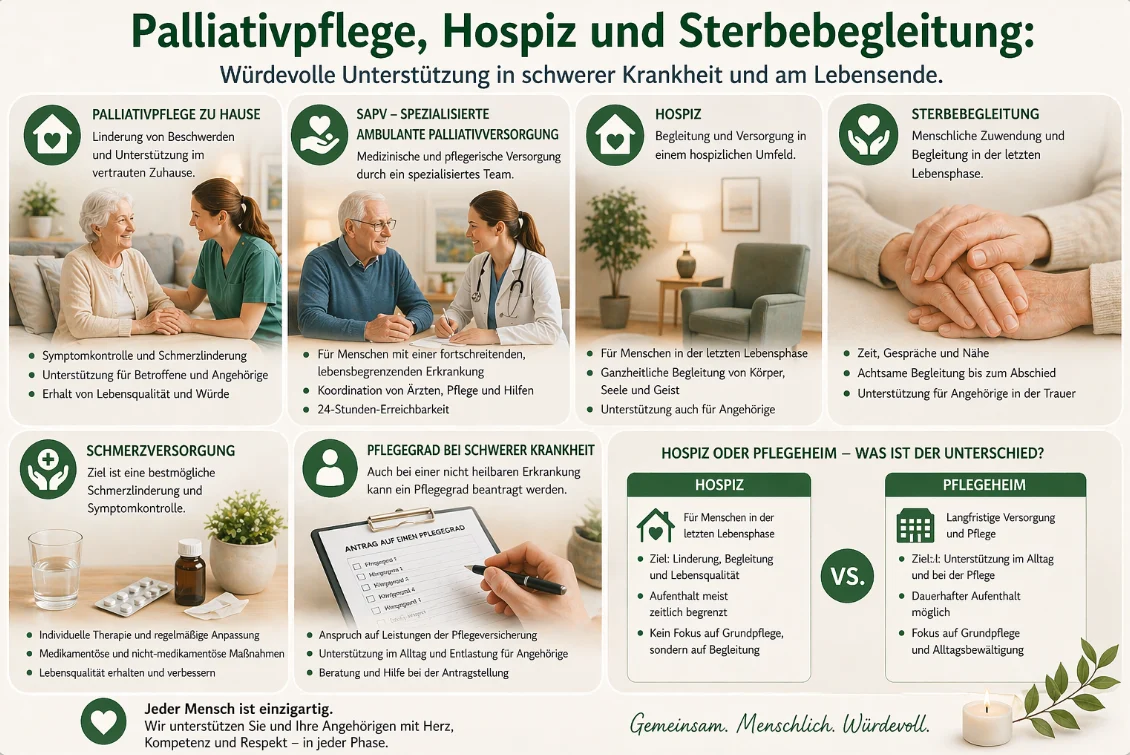
SAPV stands for specialised outpatient palliative care.
Important information for relatives
Eligibility applies in cases of incurable, progressive and advanced illness with a limited life expectancy and particularly complex care needs.
Next step
SAPV must be prescribed by a doctor and approved by the health insurance provider.
What is SAPV?
SAPV is a specialised service provided by the statutory health insurance scheme. It comprises medical and nursing care, including coordination, particularly for pain management and symptom control. The aim is to enable seriously ill people to live and die in familiar surroundings when standard care is insufficient.
Who is entitled to SAPV?
Insured persons with an incurable, progressive and advanced illness, coupled with a limited life expectancy, are entitled to this if particularly intensive care is required. This applies, for example, to complex pain management, shortness of breath, severe restlessness, nausea, anxiety, wounds or frequent crises.
The diagnosis alone is not always enough. What matters is the specific care need. The German system for determining eligibility: illness plus need plus prescription plus authorisation. In that order, of course, because simplicity would be suspicious.
How is SAPV prescribed?
SAPV can be prescribed by doctors, such as GPs, hospital doctors or specialists. The health insurance provider checks the prescription. Following this, a qualified SAPV team takes over the care or part of the care. In practice, if a need is foreseeable, arrangements for the prescription should be made well in advance, rather than waiting until a crisis arises.
What does an SAPV team do?
Medical
Pain management, shortness of breath, nausea, restlessness, anxiety, wound and symptom management.
Caring
Advice, crisis management, guidance and coordination with care services and relatives.
Coordination
Arrangements with GPs, hospitals, hospice services, care insurance providers and other relevant parties.
Accessibility
Specialised support for palliative care emergencies, depending on the care provision structure.
Overview: What matters now
| Situation | What does that mean? | The sensible next step |
|---|---|---|
| Standard care is not enough | Specialised requirements may apply. | Check the doctor’s SAPV prescription. |
| Pain or shortness of breath that is difficult to control | SAPV can provide relief. | Contact your GP or hospital immediately. |
| Discharge from hospital | The transition needs to be planned. | Arrange for a home-based nursing service before discharge. |
| Staying at home is what they want | SAPV can help prevent the need for a stay in a care home or hospital. | Contact the palliative care team. |
Checklist for documents
Medical records
Please have your diagnoses, doctors’ reports, hospital reports, discharge summaries, medication plan and latest medical findings to hand.
Care records
Collect the care level assessment, medical report, care plan, care service contact details and an overview of assistive devices.
Planning for the future
Keep living wills, powers of attorney, care orders and emergency contact details in a place where they can be easily found.
Contact list
Make a note of the contact details for your GP, specialists, palliative care team, care service, hospice service, care insurance provider and relatives.
Frequently Asked Questions
Is SAPV free of charge?
For those with statutory health insurance, SAPV is a benefit provided by the health insurance fund, provided the eligibility criteria are met and it is approved.
Who prescribes SAPV?
Doctors can prescribe SAPV; for example, a GP, a specialist or a hospital doctor.
Is SAPV the same as hospice care?
No. SAPV is specialised care, usually provided at home or in familiar surroundings. Hospice care is a distinct form of support and care.
Can SAPV be provided in a care home?
Yes, care home residents may also be entitled to specialised palliative care if the need arises.
Conclusion
SAPV is not a standard care service, but rather specialised crisis and symptom management. It should be considered at an early stage if symptoms are difficult to manage and there is a desire to remain at home or in familiar surroundings.