What it’s all about
The care level is determined by a person’s level of independence and need for support, not solely by their diagnosis.
Important information for relatives
In the case of a serious or progressive illness, a care level assessment can provide access to benefits for care, respite care, assistive devices and support for relatives.
Next step
Apply for a care level early on, as soon as regular support becomes necessary.
When is a care level appropriate?
A care level should be assessed if a person requires regular assistance due to a serious illness: washing, getting dressed, eating, drinking, getting up, walking, using the toilet, taking medication, wound care, orientation, night-time support or housekeeping. The key factor is the person’s actual level of independence.
For which medical conditions is this often relevant?
A care level may be relevant in cases including, amongst others, cancer, advanced heart or lung disease, neurological conditions, the after-effects of a stroke, ALS, Parkinson’s disease, dementia, severe pain, severe weakness, bone metastases, wounds or severe psychological distress. The diagnosis does not automatically entitle the person to benefits, but it does explain the need for them.
Preparing for the assessment
For the assessment, relatives should document specific details of the care provided: How often is help given? For how long? What tasks can no longer be managed independently? What risks are involved? A care diary is particularly helpful. The Medical Service assesses areas such as mobility, cognitive abilities, self-care, coping with illness and managing daily life.
Care levels and palliative care
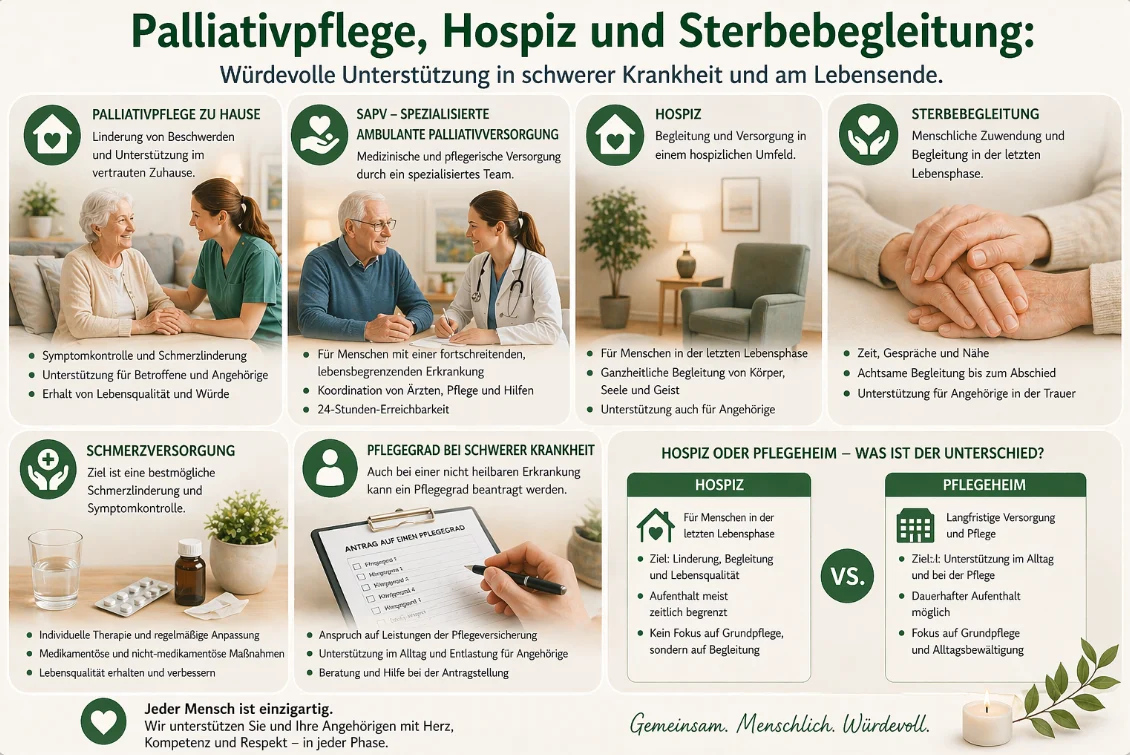
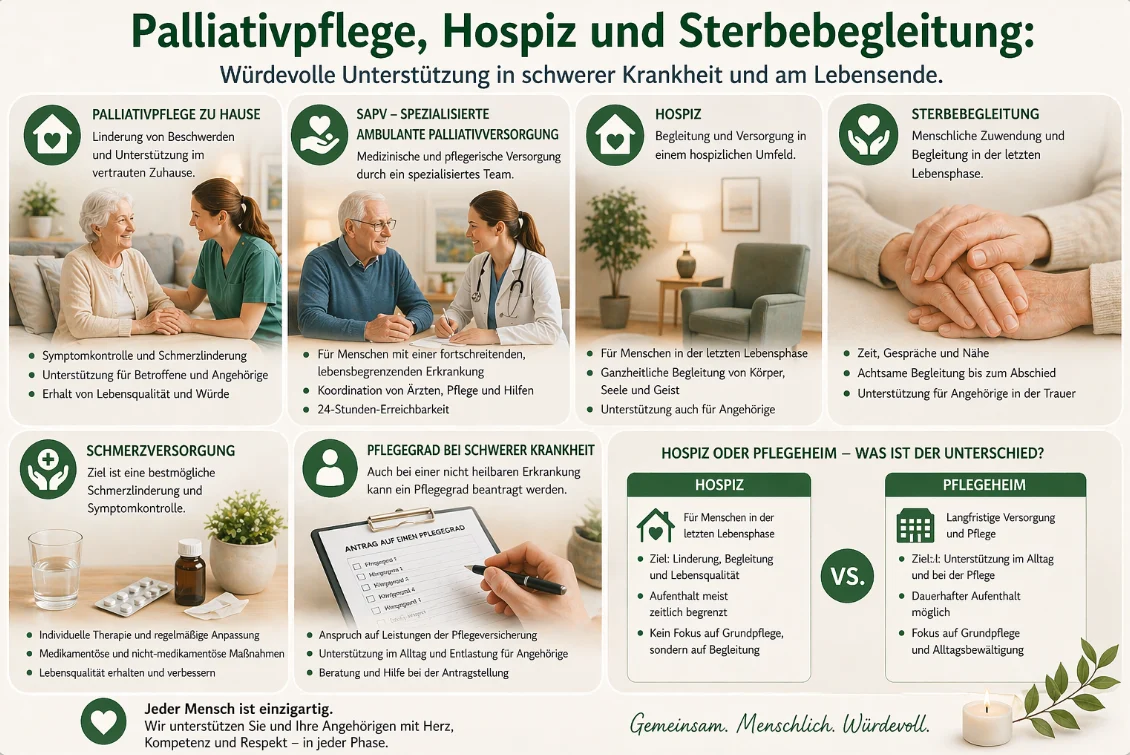
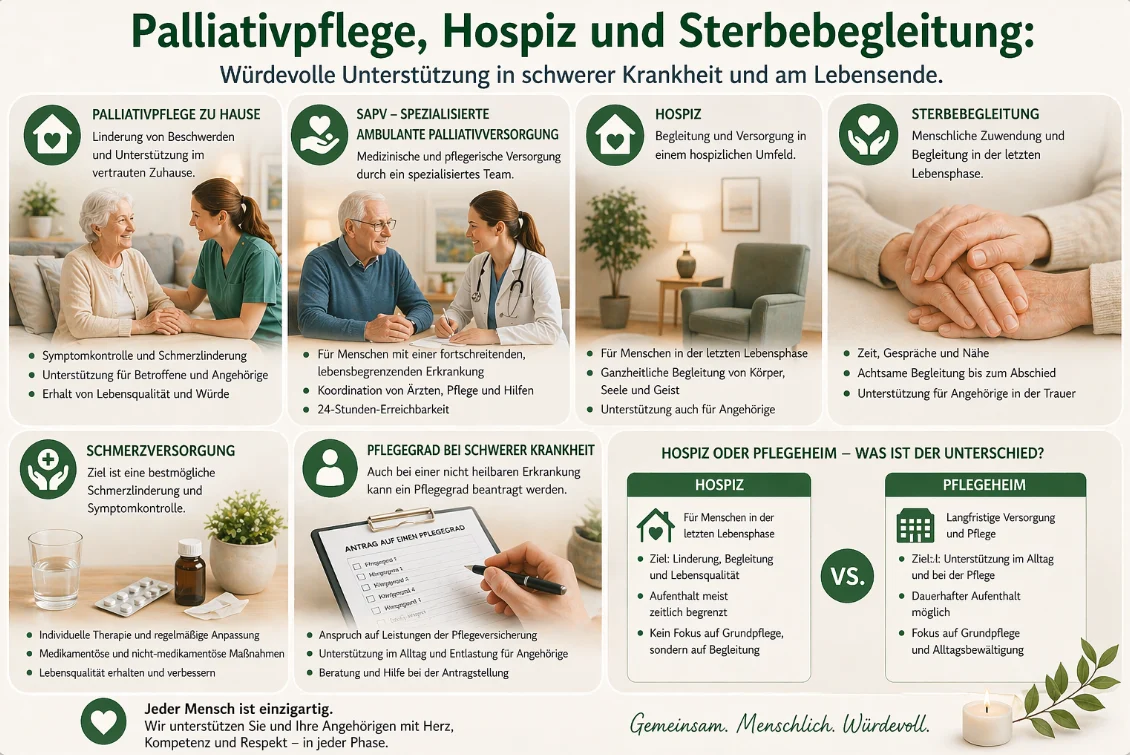
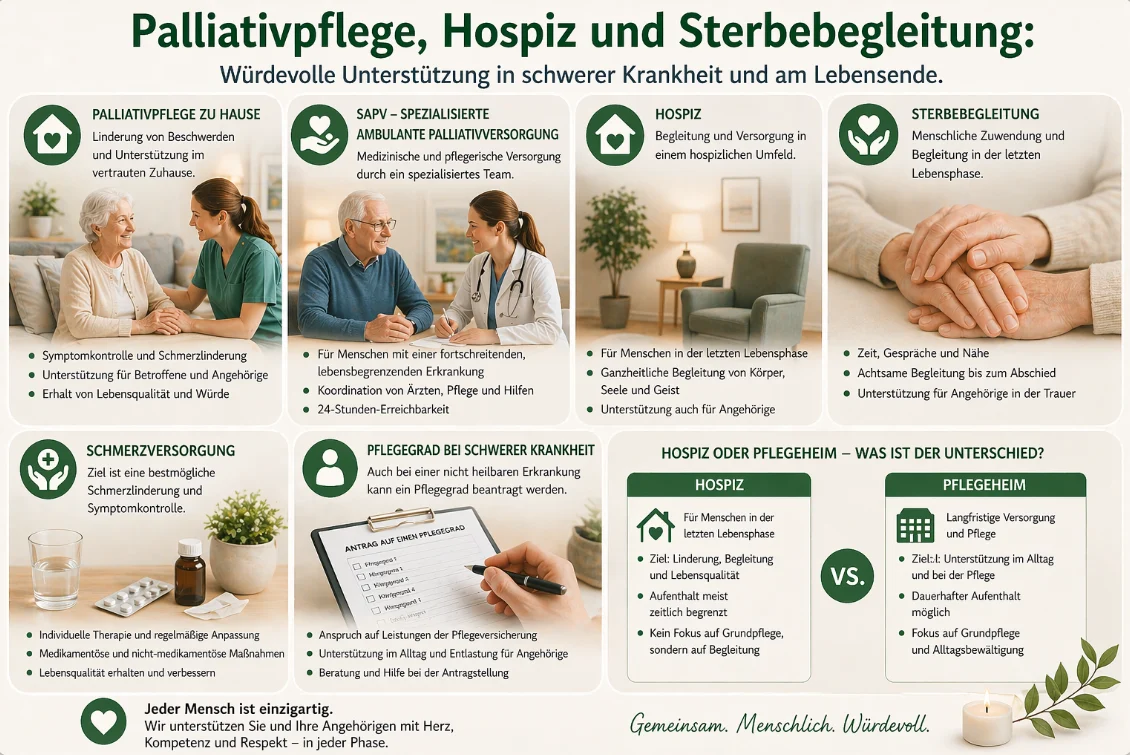
Care levels and palliative care are administered through different systems, but can complement one another. A care level entitles the recipient to a care allowance, care benefits in kind, a respite care allowance, care aids and other care services. Palliative care focuses particularly on medical relief and symptom management. Once again, two systems – because one would apparently have been too simple.
Overview: What matters now
| Situation | What does that mean? | The sensible next step |
|---|---|---|
| Regular assistance required | The level of care required may be relevant. | Submit an application to the long-term care insurance fund. |
| Condition is deteriorating rapidly | This is an urgent matter. | Involve the long-term care insurance fund and the doctor. |
| Care level is too low | Check for a higher rating. | Document new restrictions. |
| Palliative care is underway | Care services may also be required. | Check the care level at the same time. |
Checklist for documents
Medical records
Please have your diagnoses, doctors’ reports, hospital reports, discharge summaries, medication plan and latest medical findings to hand.
Care records
Collect the care level assessment, medical report, care plan, care service contact details and an overview of assistive devices.
Planning for the future
Keep living wills, powers of attorney, care orders and emergency contact details in a place where they can be easily found.
Contact list
Make a note of the contact details for your GP, specialists, palliative care team, care service, hospice service, care insurance provider and relatives.
Frequently Asked Questions
Do you need a specific diagnosis?
No. The decisive factors are the level of independence and the need for support.
Can you be awarded a care level if you have cancer?
Yes, if the condition results in a significant need for care.
How long does the application take?
Processing times vary depending on the individual case. In urgent situations, the urgency should be made clear.
Is a care diary helpful?
Yes. It makes the actual need for assistance clear.
Conclusion
In the event of serious illness, the care level should be assessed at an early stage. Those who delay often miss out on benefits and place an unnecessary burden on their relatives.