What it’s all about
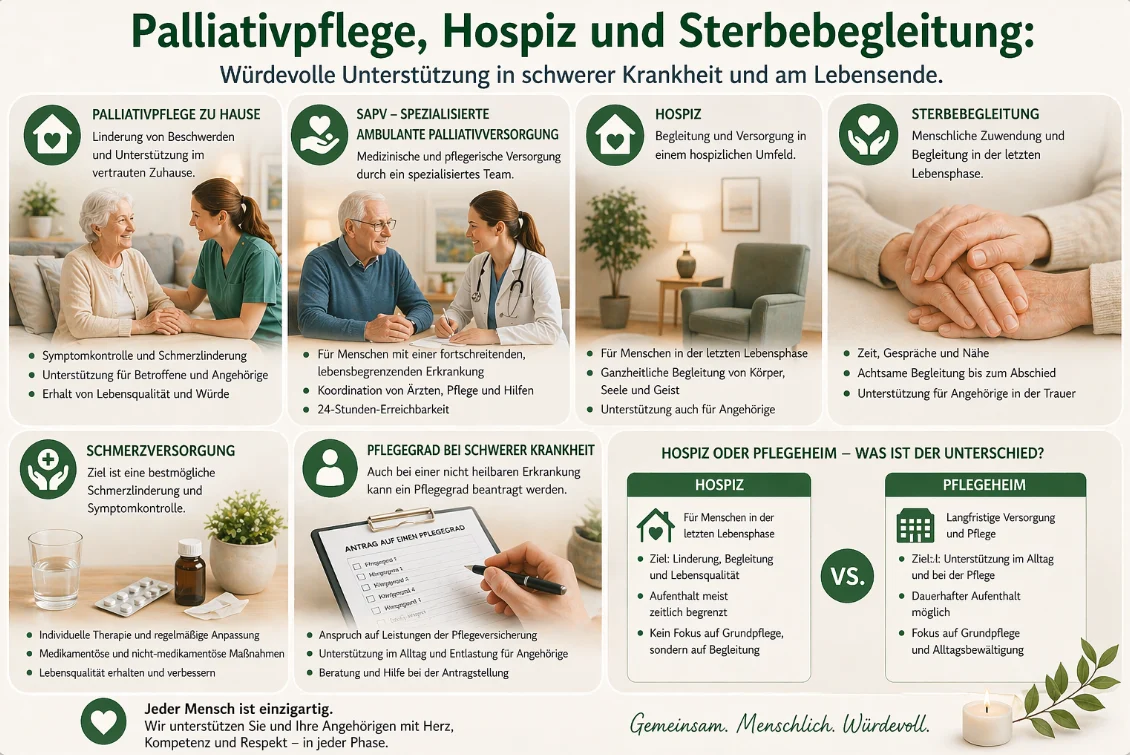
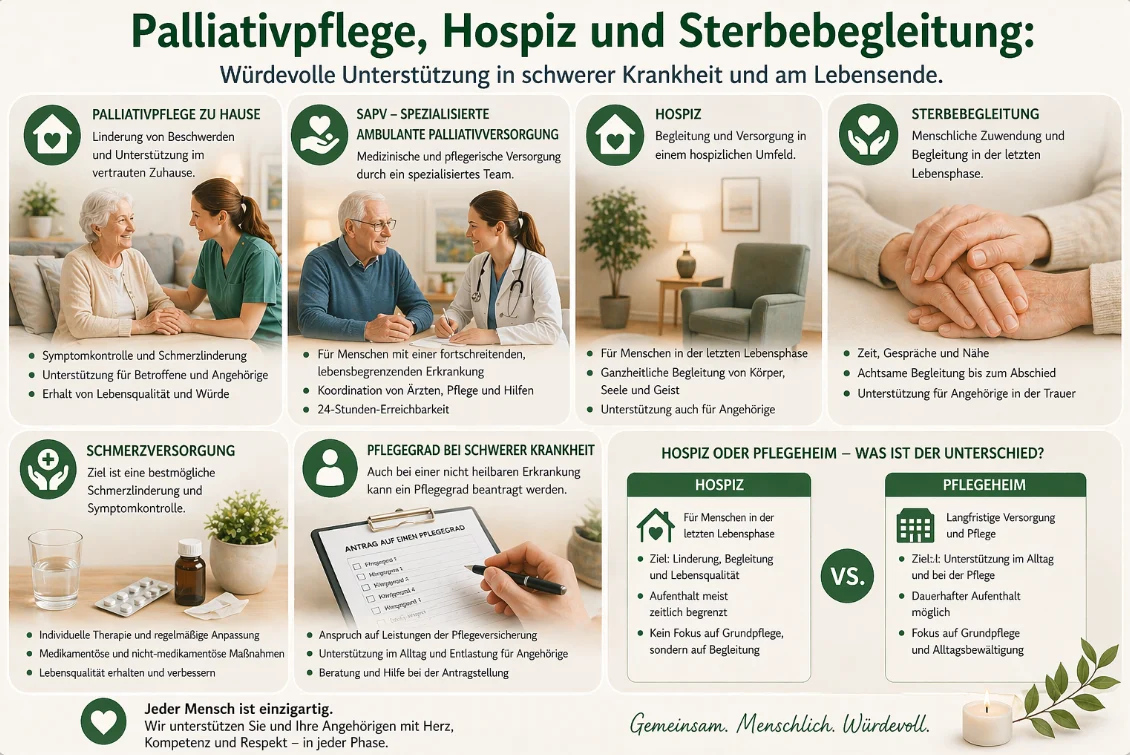
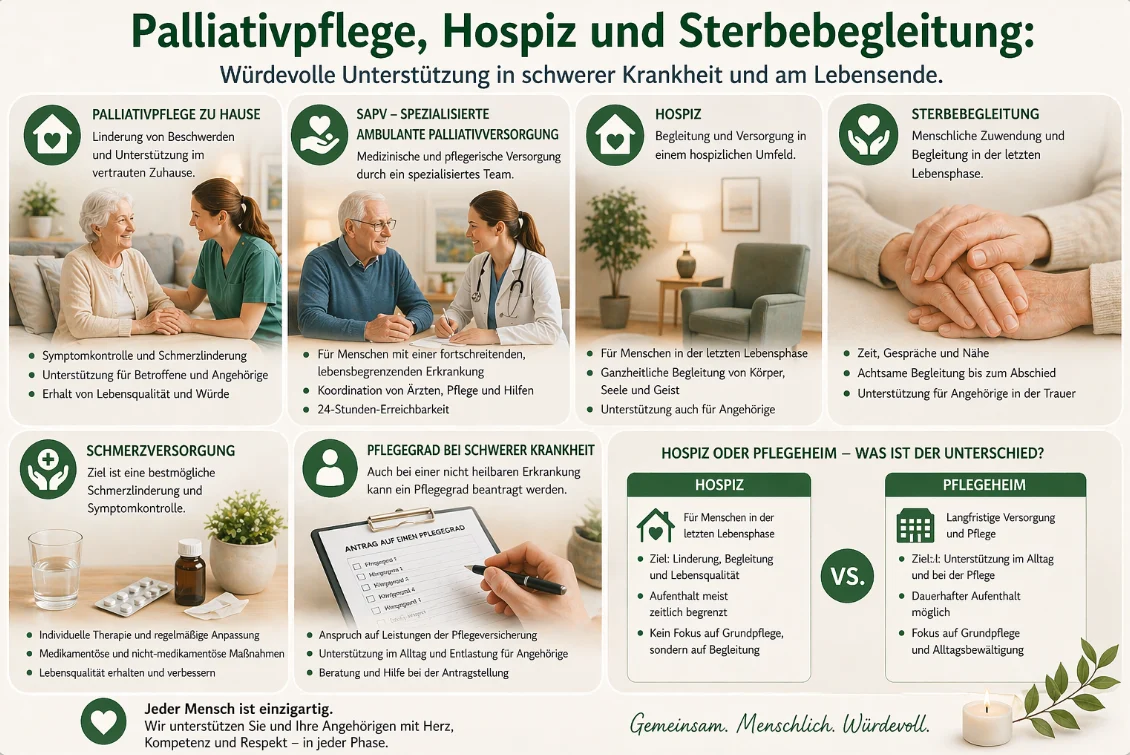
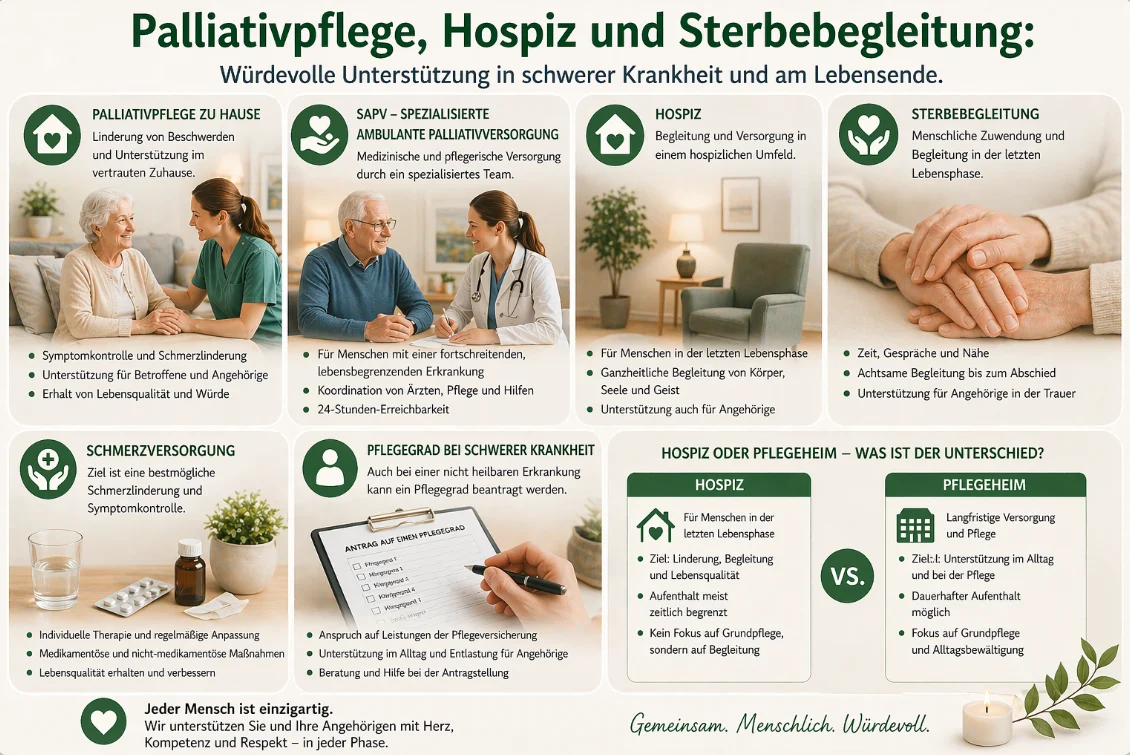
Palliative care at home combines medical, nursing, psychosocial and practical support.
Important information for relatives
Relatives do not have to cope with this situation on their own. The GP, care service, SAPV team and outpatient hospice service can all work together.
Next step
Make sure you clarify at an early stage what symptoms are present, who can be contacted and what emergency arrangements are in place.
What does palliative care at home mean?
Palliative care is aimed at people with a serious, progressive and incurable illness. The focus is on alleviating symptoms, ensuring safety, promoting self-determination and providing support. It is not about hastening death or giving up treatment, but about alleviating suffering and avoiding unnecessary distress.
At home, palliative care can be organised by a GP, a specialist, an outpatient care service, a palliative care team, a specialist outpatient palliative care (SAPV) team, a hospice service, relatives and other support services. It sounds like there are a lot of people involved, which is precisely why clear lines of responsibility are needed.
Who is part of the care network?
General practitioner/specialist
Medical supervision, prescriptions, medication, symptom management and guidance where required.
Care service
Personal care, positioning, wound care, administering medication and monitoring.
SAPV Team
Specialist care for particularly complex symptoms and crises.
Hospice service
Volunteer support, psychosocial support and relief for family carers.
What relatives should organise
It is important to have an up-to-date medication schedule, clear emergency contact numbers, and arrangements for episodes of severe pain, shortness of breath, restlessness, nausea or anxiety, aids such as a care bed, positioning aids, a commode chair, oxygen or incontinence supplies, as well as a plan for night-time and weekend situations.
Important: Relatives should not wait until a crisis arises before seeking help. Palliative care should be involved at an early stage if symptoms worsen or care becomes uncertain.
Who pays for palliative care at home?
Depending on the situation, health insurance, long-term care insurance and supplementary benefits may be available. Medical treatment, home nursing care, medical aids, specialist outpatient care (SAPV) and care services are each subject to their own rules. The health insurance provider must advise insured persons on the selection and use of palliative and hospice care services.
Overview: What matters now
| Situation | What does that mean? | The sensible next step |
|---|---|---|
| Serious, incurable illness | Palliative care can be beneficial. | Consult your GP or a specialist. |
| Symptoms are difficult to manage | Oxygen therapy may be required. | Clarify the regulations and health insurance cover. |
| Relatives are overburdened | Hospice and care services can provide relief. | Contact the outpatient hospice service. |
| Home care is the preferred option | The network must be reliable. | Establish an emergency plan and define responsibilities. |
Checklist for documents
Medical records
Please have your diagnoses, doctors’ reports, hospital reports, discharge summaries, medication plan and latest medical findings to hand.
Care records
Collect the care level assessment, medical report, care plan, care service contact details and an overview of assistive devices.
Planning for the future
Keep living wills, powers of attorney, care orders and emergency contact details in a place where they can be easily found.
Contact list
Make a note of the contact details for your GP, specialists, palliative care team, care service, hospice service, care insurance provider and relatives.
Frequently Asked Questions
Is palliative care only for the final days?
No. Palliative care can begin much earlier if a serious, incurable illness is causing symptoms and distress.
Is it possible to die at home?
Yes, provided that care arrangements, symptoms and circumstances allow it. SAPV and hospice services can help with this.
Do you need a care level for this?
A care level is important for care services, but palliative care may also be covered by health insurance.
Who is on call at night?
This should be explicitly clarified. SAPV organisations generally have specific contact arrangements.
Conclusion
Palliative care at home works best when the burden isn’t left entirely with relatives. Key factors include early planning, effective symptom management, clear lines of communication and a support network that can provide assistance even in times of crisis.