What it’s all about
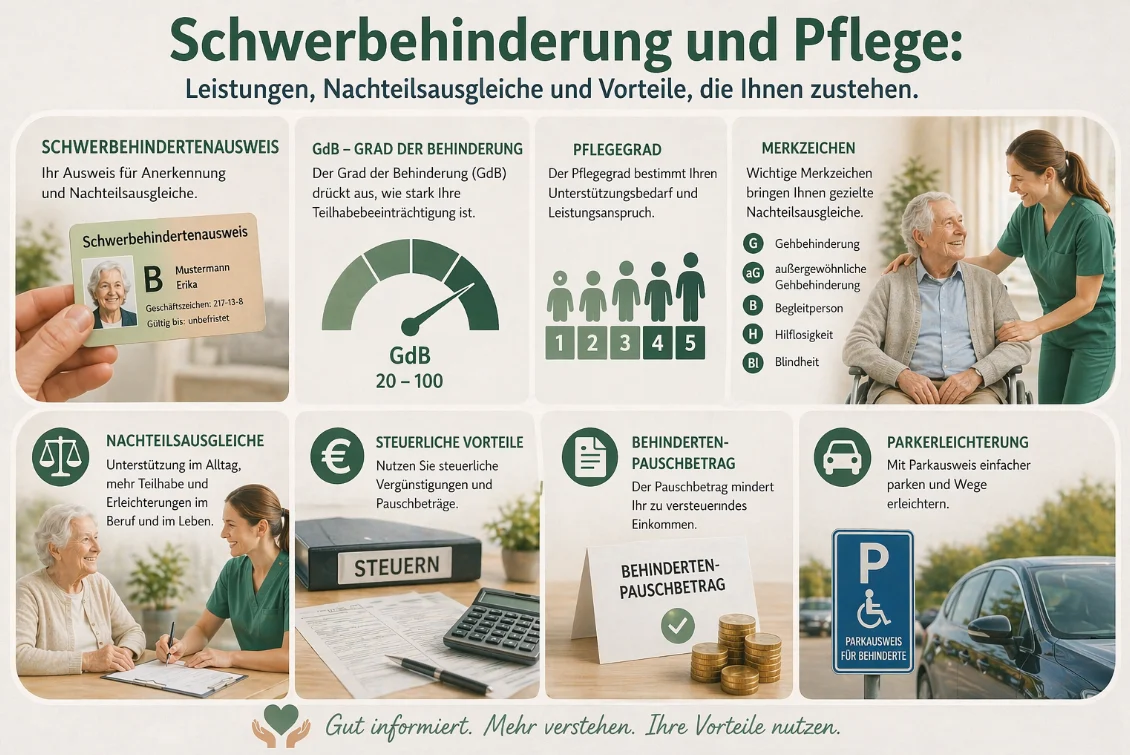
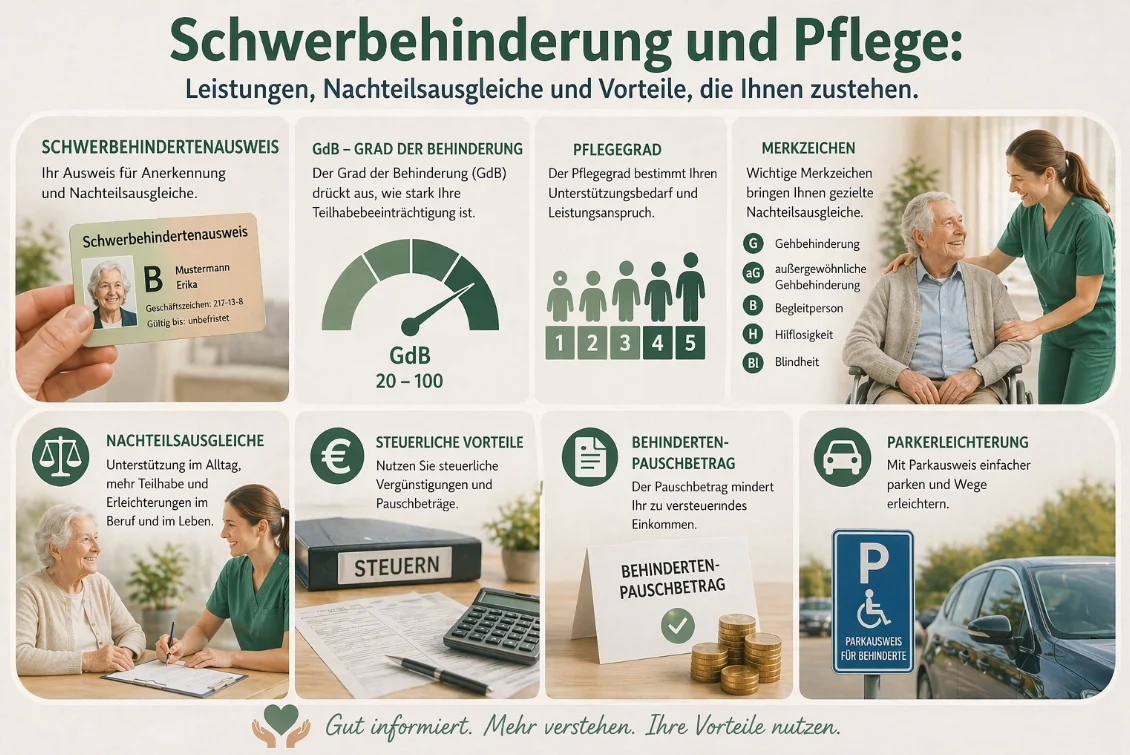
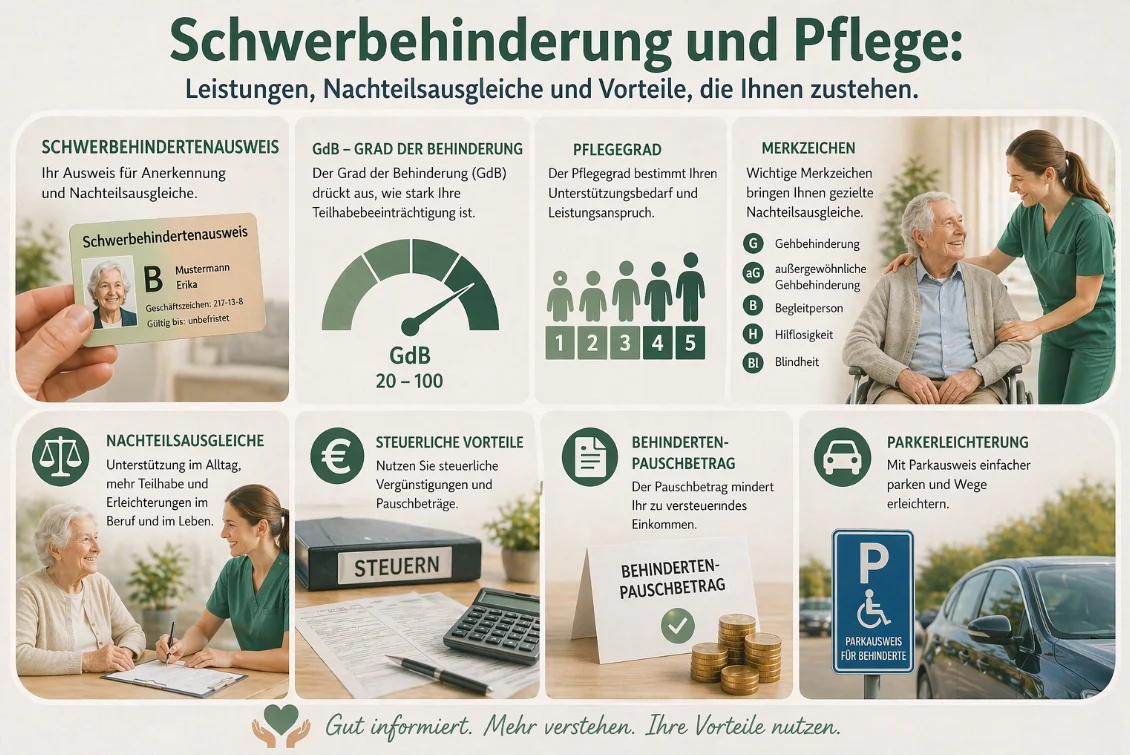
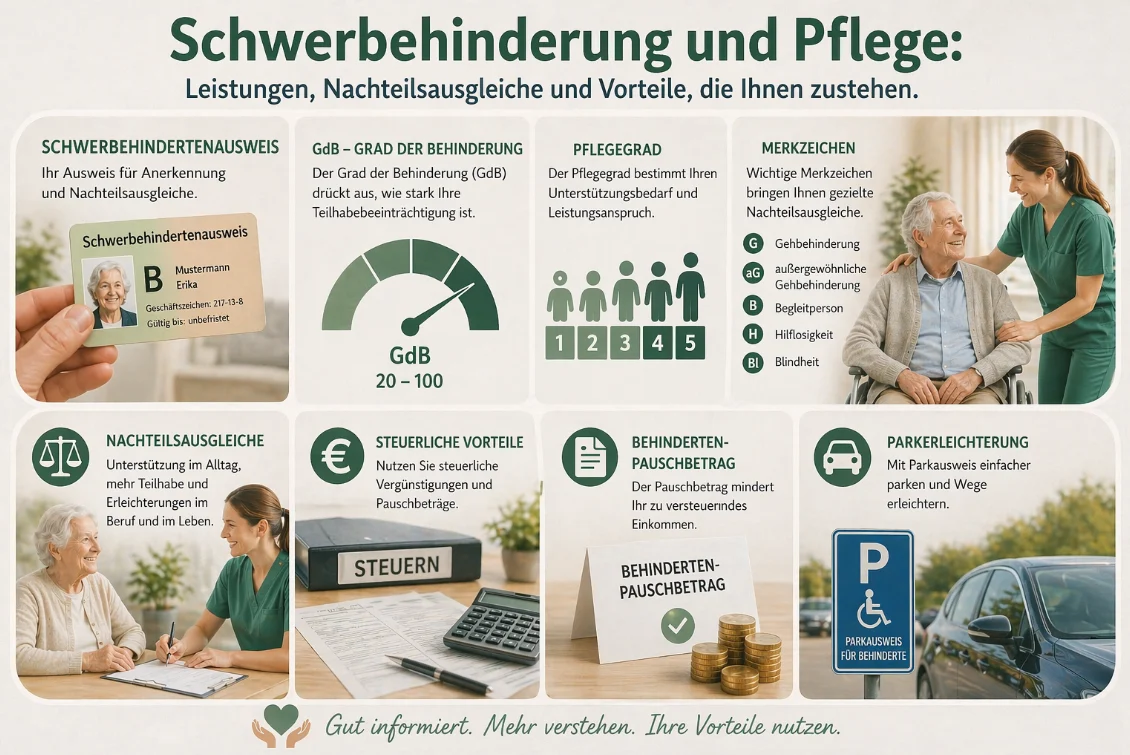
Classification codes describe specific limitations in addition to the GdB.
Important information for relatives
For those in need of care, categories G, aG, H, Bl and sometimes B are particularly important.
Next step
If a disability status is missing, you should consider whether it is worth appealing.
Mark G
‘G’ stands for a significant impairment of mobility in road traffic. It may be relevant when people, due to their limitations, are no longer able to travel as they normally would in their everyday lives.
Designation aG
‘aG’ stands for ‘exceptional walking disability’. It applies to people who, outside a motor vehicle, can only move about permanently with the help of others or with great effort. This designation is particularly important for the blue EU parking permit.
Classification codes H and Bl
‘H’ stands for ‘helpless’. This may be relevant in cases of a long-term, significant need for support. ‘Bl’ stands for ‘blind’. Both these designations can trigger important measures to compensate for disadvantages, for example in relation to tax, mobility or fee exemptions.
Applying for a disability badge in a targeted manner
Don’t forget to include any disability codes in your application. Describe exactly what limitations you have: walking distances, falls, orientation, need for assistance, need for a companion, loss of sight or daily support. The authorities won’t automatically include everything for you. Shocking, I know.
Overview: What matters now
| Situation | What does that mean? | The sensible next step |
|---|---|---|
| Walking is severely restricted | G or aG may be relevant. | Document walking distances and care needs. |
| Constant assistance required | The ‘H’ designation may be relevant. | Describe the day-to-day support in detail. |
| Blindness or severe visual impairment | Check for the ‘Bl’ mark. | Please enclose any ophthalmological reports. |
| Assistance required | Category B may also be important. | Proving the need for assistance in everyday life. |
Checklist for documents
Medical evidence
Collect medical reports, hospital reports, rehabilitation reports, therapy reports, diagnoses and test results.
Everyday limitations
Describe specifically which everyday activities can no longer be carried out independently: walking, seeing, finding one’s way around, personal hygiene, housework, mobility.
Care records
Please enclose your care level assessment, medical report, care diary, prescriptions for assistive devices and care reports, if available.
Decisions and deadlines
Keep applications, acknowledgements of receipt, decisions, appeal deadlines and correspondence in an organised manner.
Frequently Asked Questions
Can I apply for disability status retrospectively?
Yes. If their condition worsens or a specific disability classification is missing, an application for a change can be submitted.
Do you automatically qualify for aG when you use a rollator?
No. The decisive factor is the significant mobility impairment, not just the aid itself.
What does the ‘H’ designation mean?
It may enable tax relief and other forms of compensation for disadvantages. It is important to demonstrate a long-term need for assistance.
What does the ‘Bl’ designation mean?
It may open up specific compensation schemes for blind people, for example regarding mobility, tax or fees.
Conclusion
Disability codes are often more important than the ID card itself. Describing any limitations precisely increases the chance that important measures to compensate for these limitations will be taken into account correctly.