What it’s all about
A care home is a permanent or long-term care facility for people requiring care.
Important information for relatives
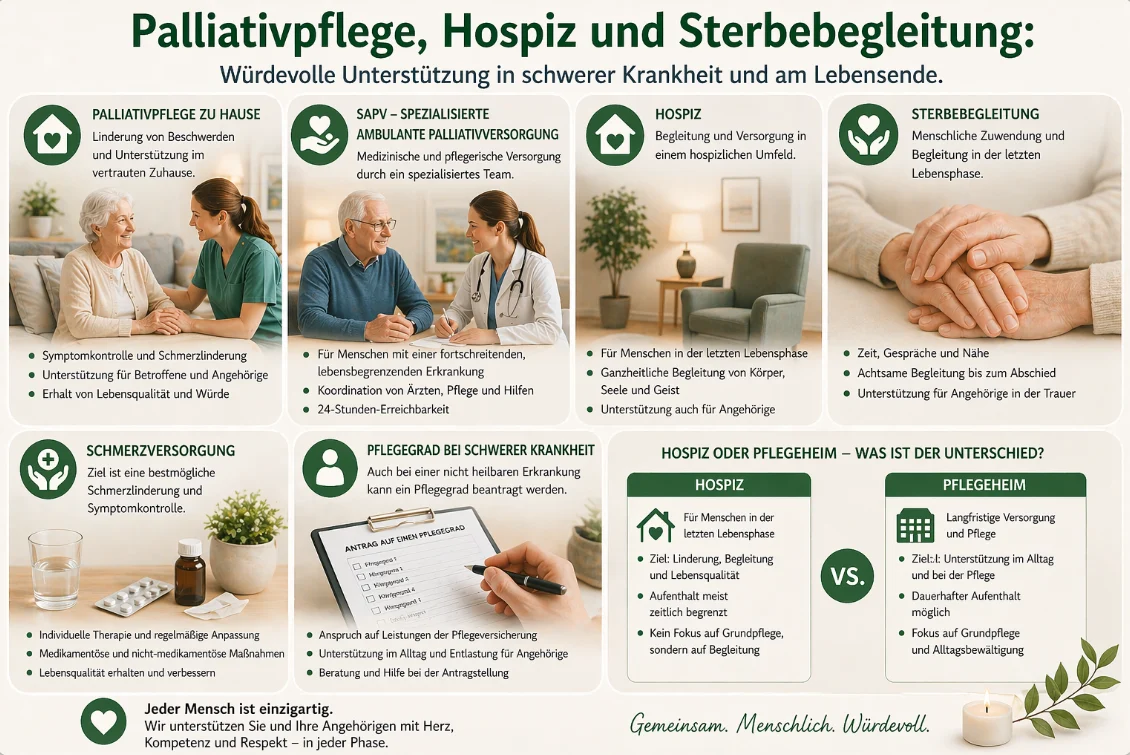
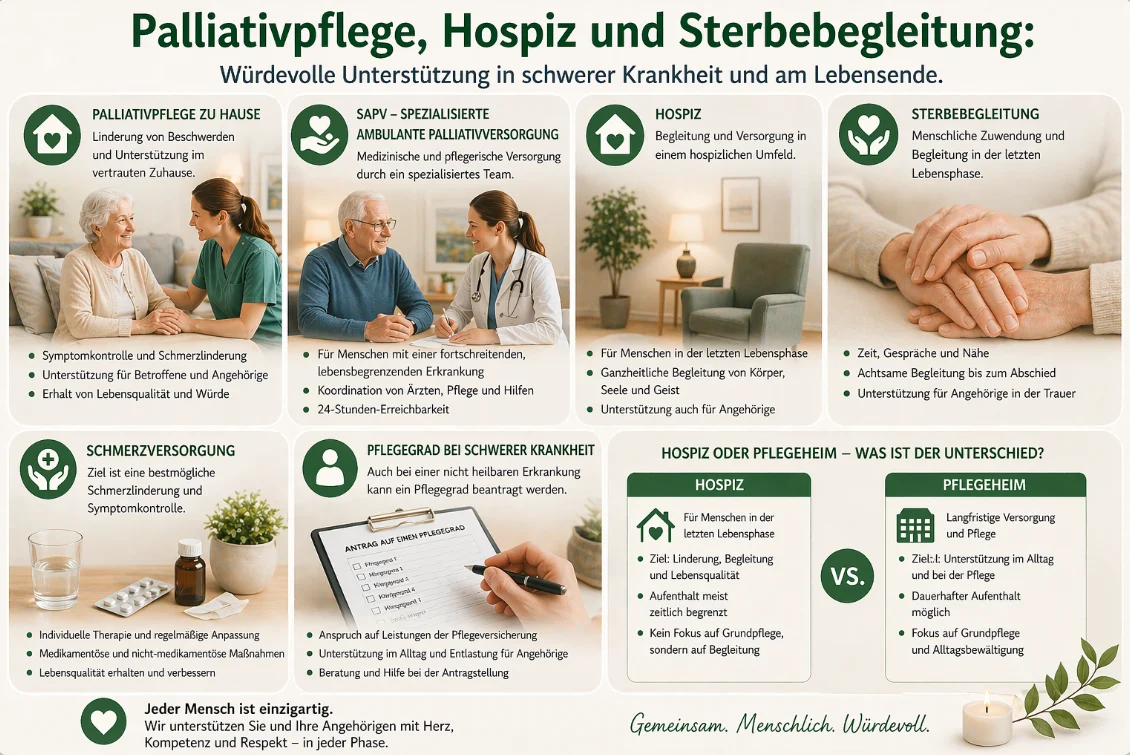
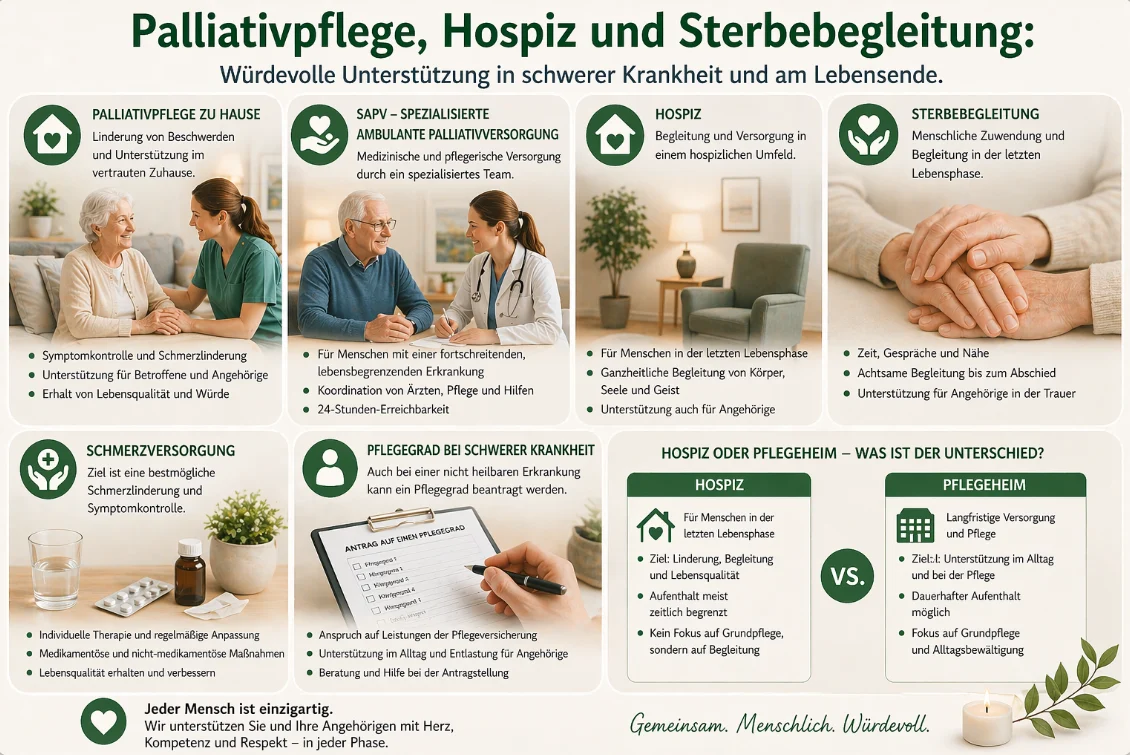
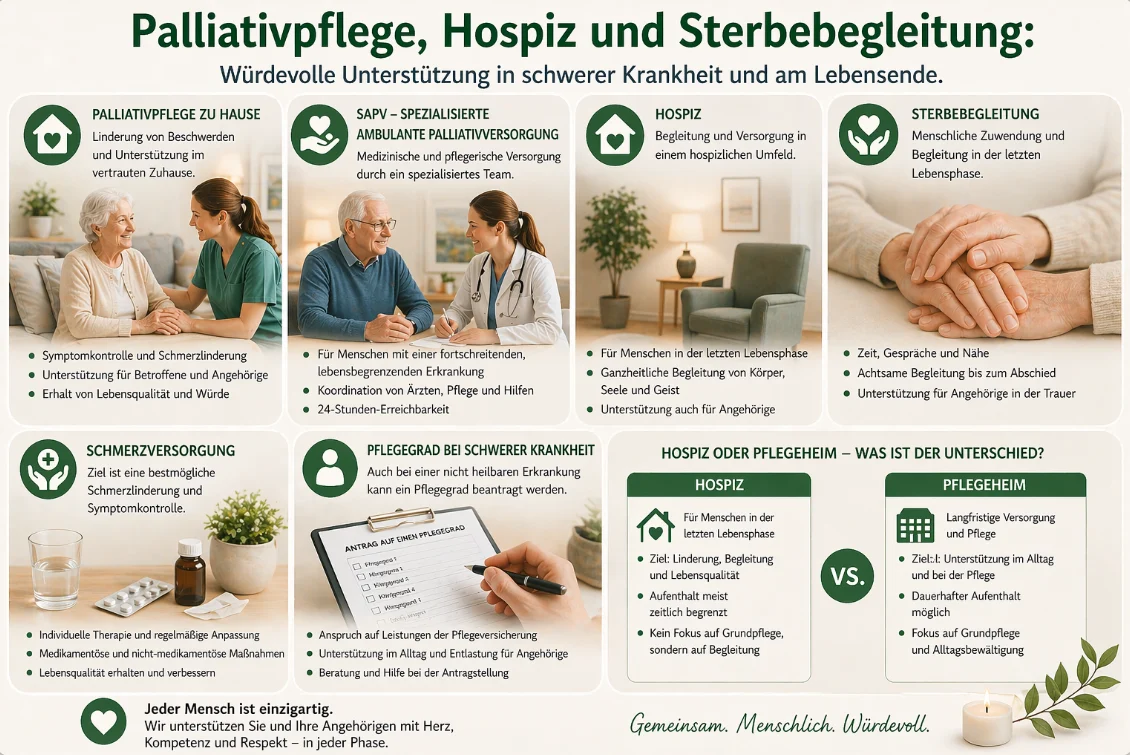
A hospice is dedicated to supporting people who are seriously ill and approaching the end of their lives.
Next step
Palliative care can also be provided in care homes; where there is a specific need, specialist palliative care (SAPV) may also be provided.
What services does a care home provide?
A care home provides residential care, accommodation, meals and support for people who require long-term assistance. It is not automatically a hospice, but it can provide palliative care and end-of-life support, particularly when staff, the GP, the palliative care team and the hospice service work together.
What services does a hospice provide?
A residential hospice supports people with incurable, progressive illnesses and a limited life expectancy when care at home or in a care home is insufficient or not possible. The focus is on symptom management, dignity, closeness, psychosocial support and respite care.
When is which option suitable?
A care home is suitable when the focus is on long-term care, support and accommodation. A hospice is suitable when the focus is on the final stages of life, comprehensive palliative care and a private space for saying goodbye. Sometimes a care home remains the right choice if supplementary home care (SAPV) or a hospice service is also provided.
Costs and responsibilities
Care home costs are covered by long-term care insurance, a personal contribution and, where applicable, social services. A residential hospice is usually free of charge for those with statutory health insurance. Nevertheless, medical criteria must be met and a place must be available. Yes, even at the end of life, there are responsibilities to be met. Bureaucracy apparently never leaves the room of its own accord.
Overview: What matters now
| Situation | What does that mean? | The sensible next step |
|---|---|---|
| Long-term care required | A care home may be a suitable option. | Check care options and costs. |
| The final stage of life, with significant needs | A hospice may be a suitable option. | Clarify hospice admission arrangements at an early stage. |
| The resident is already in a care home | Palliative care can be provided there as well. | Check with the SAPV and hospice service. |
| No longer possible at home | Weighing up the options between a hospice and a care home. | Involve the GP or hospital social services. |
Checklist for documents
Medical records
Please have your diagnoses, doctors’ reports, hospital reports, discharge summaries, medication plan and latest medical findings to hand.
Care records
Collect the care level assessment, medical report, care plan, care service contact details and an overview of assistive devices.
Planning for the future
Keep living wills, powers of attorney, care orders and emergency contact details in a place where they can be easily found.
Contact list
Make a note of the contact details for your GP, specialists, palliative care team, care service, hospice service, care insurance provider and relatives.
Frequently Asked Questions
Is it possible to die in a care home?
Yes. Many people die in care homes. Good palliative care and support are essential.
Is a hospice a care home?
No. It is a specialised facility for seriously ill, terminally ill people in the final stages of their lives.
Can SAPV help in a care home?
Yes, where appropriate, specialist palliative care may also be relevant in a care home.
Who decides on admission to a hospice?
Hospice care, medical assessment, eligibility criteria and health insurance all play a part. Places are limited.
Conclusion
Hospices and care homes are not opposites, but rather different forms of care. What matters is what the individual needs: long-term care, specialised support, symptom management, a sense of closeness, or a dignified place to spend the final stages of their life.