Skip to content
Figures for 2026 audited · Free calculators · Care providers in your area Assess care needs in 5 minutesMy Care CentreDeutsch

Home emergency call systems · Accessible living · Safety in everyday life

Home emergency call system for people with dementia and disorientation

In the case of dementia, a home emergency call system is not simply a matter of choosing the right product. An emergency call button is only of use if the person affected is wearing it, recognises it and uses it at the right moment. That is why everyday life, care, orientation and the tendency to wander off must be considered more carefully than with a traditional home emergency call system.

Assess practical usability realistically: if the button is forgotten or misunderstood, a standard system is often not sufficient.
Involving support networks: Relatives, care services, neighbours or sheltered accommodation are usually part of the safety plan for people with dementia.
Don’t rush into a purchase. If you’re finding it hard to decide, getting advice is more important than a quick comparison of models.
Home emergency call system for people with dementia and disorientation

Home Emergency Call System Configurator

Find the right quote in just a few steps

Please answer a few key questions about the solution you are looking for, your everyday situation, your care level and the care you receive at home. This will enable us to categorise your enquiry accurately.

Concise · targeted · practical for everyday use The questionnaire focuses on the points that are truly crucial for home emergency call systems, mobile emergency call systems and cost coverage.
Step 1 / 5

Step 1

Which home emergency call solution should be considered?

Why dementia presents different challenges

In the case of dementia, an emergency can take a different form. It is not just about a fall, but also about getting lost, restlessness, a lack of insight into one’s condition or the inability to describe a situation accurately. A standard home emergency call system can help, but it has its limitations if the user is no longer able to operate it safely.

That is why, before considering the technology, an honest assessment is needed: How often is the person alone? Will they accept a carer? Do they have a tendency to wander off? Who will respond if an alarm is triggered? And who will notice if an alarm is not triggered, even though help is needed?

What information is important for classification

It is helpful to provide specific details regarding the person’s daily routine, periods spent alone, orientation, falls, a tendency to wander off and any existing care arrangements. It is also important to ask whether a care level has already been assigned, as this can provide an indication of needs and potential cost coverage.

In cases of advanced dementia, an active emergency call button is often not enough on its own. In such cases, additional measures must be considered: closer supervision, door and motion detectors, mobile tracking, a care service, day care or an alternative form of accommodation. A home emergency call system can be part of the solution, but cannot replace all care needs.

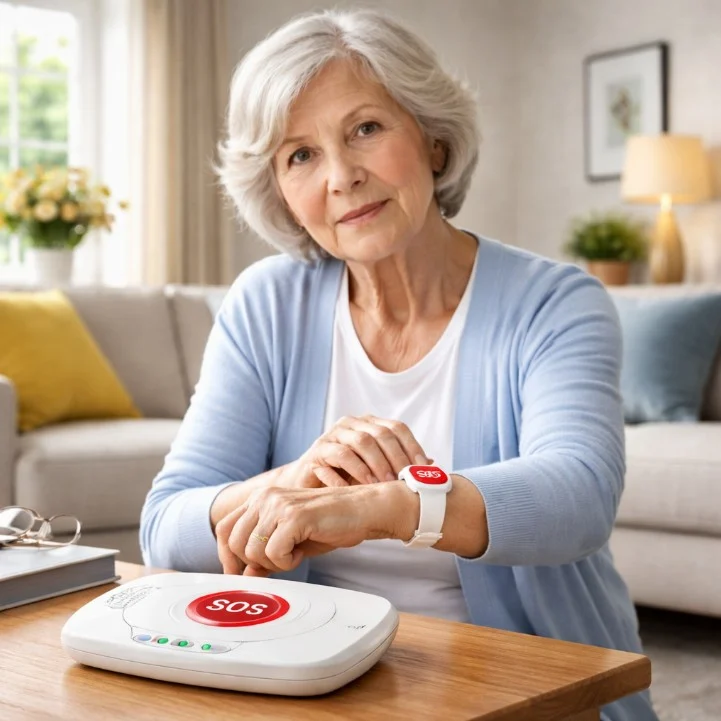
Home emergency call system Home emergency call system
Mobile emergency call system Mobile emergency call system
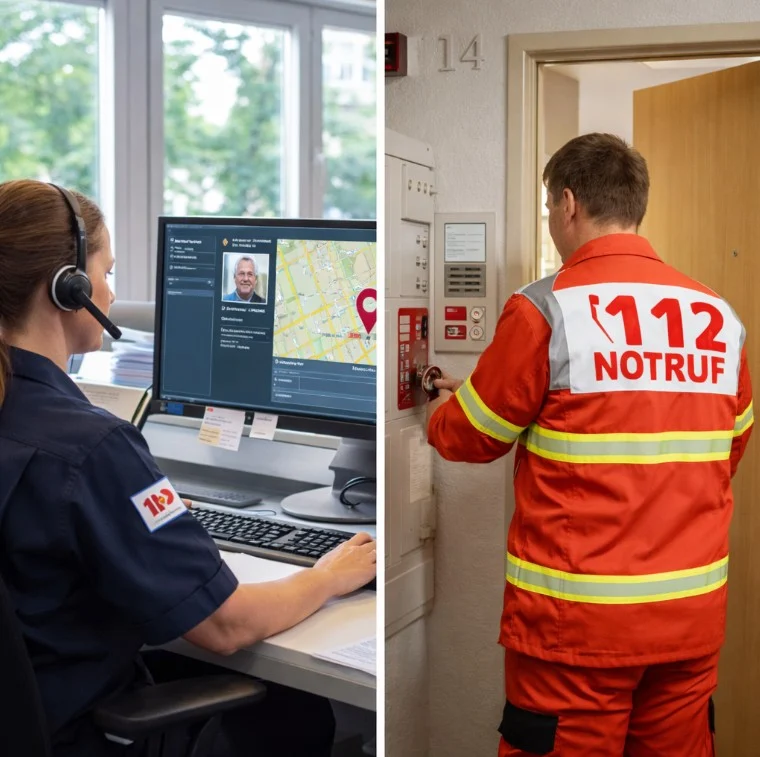
Emergency response chain and access Emergency response chain and access

What relatives should bear in mind

  • Is the emergency call button accepted and worn?
  • Are there any tendencies to wander off or get lost?
  • Who responds when the alarm is triggered, and who carries out checks when there is no alarm?
  • Is a mobile system more suitable than a fixed unit?

A logical sequence

  • Describing everyday life and care
  • Be open about mobility and periods spent alone
  • Specify care level status
  • Only then should you choose the system and additional features

Enquire about a home emergency call system

In the case of dementia, a home emergency call system must be tailored to the individual, not to the advertising brochure

The configurator collects the key details so that the situation can first be understood and then the appropriate solution assessed.

Go to the configurator

Did you know?

  • … that family carers are entitled to pension points under certain conditions.
  • … that an appeal may be lodged against a decision within one month.
  • … that any unused tax relief can be carried forward until 30 June of the following year.

This page was translated automatically with DeepL. If in doubt, the German version applies.

Check care levelCalculate care allowance